
Category Archives: Reviews
Chlorophyll Bluess: Molly Zuckerman-Hartung
Written on December 2, 2013 at 10:00 am, by Kara Pickman
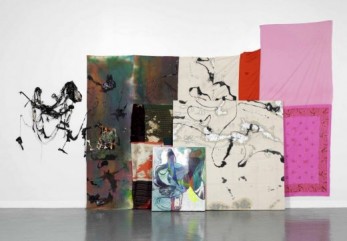
As you enter the gallery you encounter the name of the exhibition, Chlorophyll Bluess, painted directly on the wall in neon pink and blue. You create a narrative around this seemingly sudden inner impulse to paint, imagining the artist up on a ladder or on a chair with a can of spray paint and the lace placemat she used for a stencil. This is the same type of sequence of actions that is pictured when you look at assemblage art. A narrative is formulated around the artist building the object.
End Game Aesthetics: Aramis Gutierrez
Written on December 2, 2013 at 10:00 am, by Kara Pickman
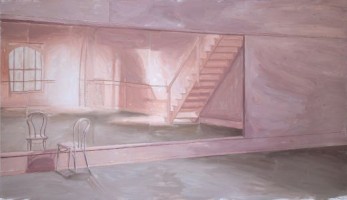
It is potential energy, buzzing with doubt and hope, that describes the imagery of End Game Aesthetics, the new solo exhibition from Aramis Gutierrez. But while he maintains a comfortable distance from many of the historical events which inspired his works, he allows for painting itself to steer its viewer towards a reincarnation of the energies prior to, during, and directly following a ballet dance. These paintings convey a desire to move politically difficult and historically messy events to the forefront; the artist’s hand is still moved by the romance of dance, but it is not without the gravity of how the world of dance operates: commanded by borders, contracts, rivalries, and state secrets.
John Divola: As Far As I Could Get
Written on December 2, 2013 at 10:00 am, by Kara Pickman
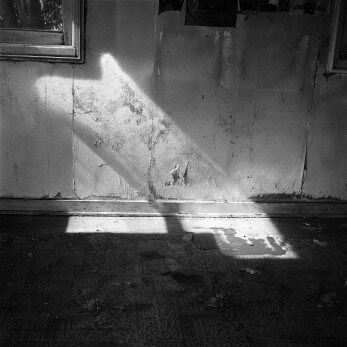
As Far As I Could Get is John Divola’s long overdue, first museum survey. With an unusual twist, the presentation splits four decades of Divola’s practice across three Southern California institutions. The show runs concurrently at the Santa Barbara Museum of Art (SBMA), Los Angeles County Museum of Art (LACMA) and Pomona College Museum of Art.
Love of Technology
Written on December 2, 2013 at 10:00 am, by Kara Pickman
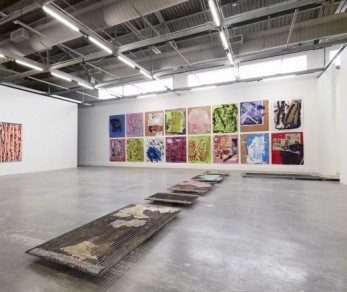
Even those not haunted by dystopian technological nightmares may well have experienced the commonplace urge to both embrace and reject new technologies, and this exhibition encourages us to examine our relationship with technology by addressing both our enthusiasm for new advances and fears that technology will replace us.
And Every Day Was Overcast
Written on December 2, 2013 at 10:00 am, by Kara Pickman
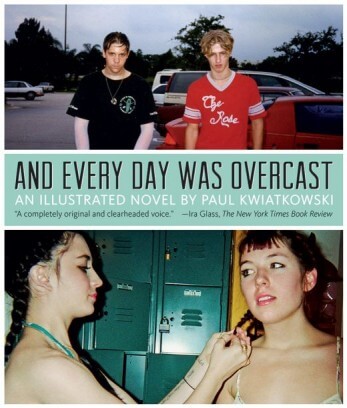
Paul Kwiatkowski’s illustrated novel And Every Day Was Overcast is a series of Erik Persoff stories. Here are bright kids who might have turned out fine in another state but are doomed by the fact that they were born here: two sisters who live behind a biker’s tavern, a kid obsessed with his transistor radio, the daughter of a single mom who believes her kids should do drugs at home “because it’s safer.”
ARTISSIMA 2013
Written on November 15, 2013 at 10:47 am, by Kara Pickman
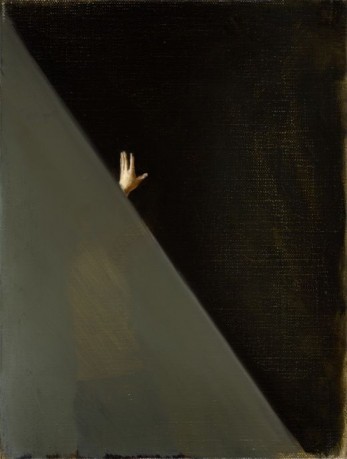
The actual content presented via the gallery booths and the related curatorial scenarios was of an elite, cerebral grade. While there were elements of commercial ambition towards private buyers (interior décor-friendly works from Julian Opie, Martin Creed, Gilbert & George and Anish Kapoor were available), the fair’s primary focus appeared to rest on the critical dialogue between artists, artists and curators, and curators and viewers.
Studio Life: Rituals, Collections, Tools and Observations on the Artistic Process
Written on October 29, 2013 at 11:02 am, by Kara Pickman
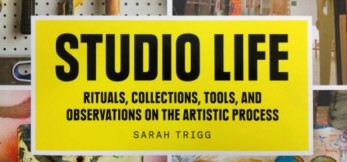
Since art is primarily experienced as something that’s been completed—with all of the source material, labor, ideas and time compressed and locked into an object on display—the weirder appendices of its production are rarely seen. The talismans that artists collect and keep in their studios may be enigmatic, banal and functional.
Dark Nights of the Universe
Written on September 12, 2013 at 7:00 pm, by Kara Pickman
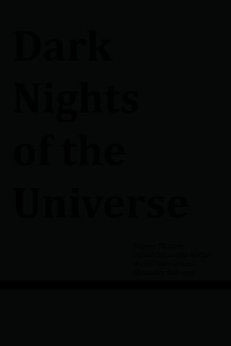
The occasion for this text was a four-night gathering in which each contributor gave a talk about hermeticism and Laruelle’s work. A version of each lecture is published here. But it is perhaps another, more tangential occasion that equally colors this work: that of the original text’s translation. “Du Noir Univers” was first translated for an exhibition catalogue for Hyun Soo Choi’s black paintings in 1991. So while the true concerns of “On the Black Universe: In the Human Foundations of Color” are ontological, it is perhaps forgivable to approach it aesthetically. The cover is printed black on black, and the text interspersed with stills from Aaron Metté’s 2012 video which shares the same title as Laruelle’s essay. It looks at home on Mayhem’s merch table.
Martin Kippenberger: Sehr Gut | Very Good
Written on September 12, 2013 at 7:00 pm, by Kara Pickman
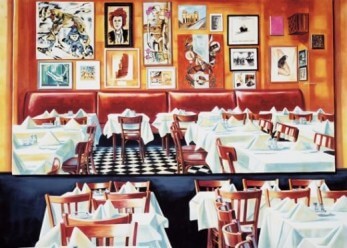
The Hamburger Bahnhof, a former railway station that now houses the Museum für Gegenwart, or Museum for the Present, is intimidatingly large. Seeing so few works of Kippenberger’s on its clinically austere walls is like viewing an eruption through a peephole, but the exhibition still manages to convey that he was a master of many styles—from abstraction to impressionism to realism—as much as a playful, sloppy interlocutor of conceptual games and unceasing appropriation. He was a man of highs and lows who dragged from the spectrum of his own experience.
The Lost Boys: Doğan Arslanoğlu and Johnny Laderer
Written on September 12, 2013 at 7:00 pm, by Kara Pickman
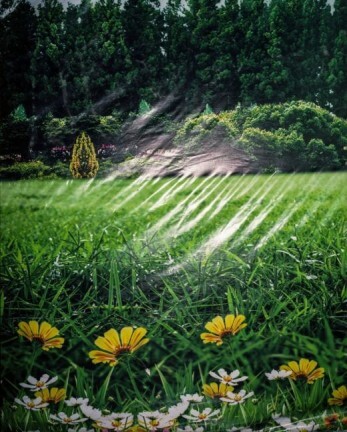
The Lost Boys of J.M. Barrie’s Peter Pan are something of a misnomer. As the story goes, they were misplaced by their mothers and, having gone unclaimed for several days, were taken to Neverland. The Lost Boys barely had time to feel lost before being thrust into an environment that would inevitably shape their personal narratives. The sentiment is the same in Doğan Arslanoğlu’s and Johnny Laderer’s show at the David Castillo Gallery. Here, the story’s protagonists are not lost; instead, they are carving out a home, a narrative composed of intimate experience, nostalgia, the effect of place on a boy’s self-actualization.