
Tag Archives: visual
Profile:Jillian Mayer

Jillian Mayer is a real estate agent on Second Life—she manages the sales of online parcels of land you can’t touch, a daunting task. And like the Internet at large, her work is similarly ethereal, straddling the line between the physical and a vast unconsciousness, best understood by a member of a generation that lived through Brian Eno’s Windows 95 theme and Oregon Trail on boxy IBMs.
Art Outside

Creative Time President and Artistic Director Anne Pasternak and Bass Museum of Art Executive Director and Chief Curator Silvia Cubiñá discuss issues and implications of public art.
The Nightclub
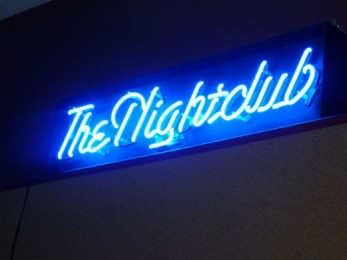
The idea came from a very selfish position to empower artists in a remarkable literal sense, by inviting them to take a day to curate an exhibition. The opportunity would allow artists to perform and create projects they could not do in another architectural space.
Hungry Kisses: Tongues in Picasso
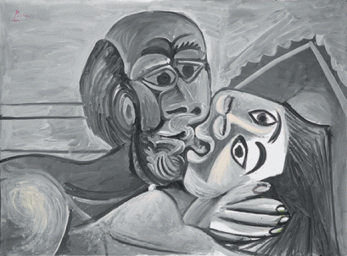
In kissing, the action is really on the inside—felt rather than seen—experienced only by the two engaged in it. One could even say then that kissing structurally resists visual representation, making the story of kissing in art particularly interesting.
Julia Berkman: Edge of Sunshine
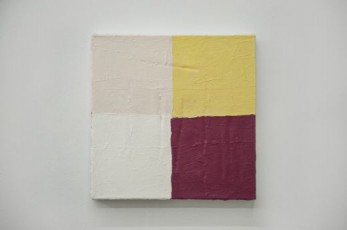
This illusion in the paintings is the work, and through this illusion she performs an exit to the game. The basis for this is a very sensitive, refined and assertive gesture.In a simultaneously natural and forced manner, she covers the entire canvas with textural brush marks that look more like the residue of a glue stick than paint.
Emmett Moore: Surface Tension

Interested in sculptural problem solving, function, and fabrication, Moore reduces tables, hanging lights, and wall tiles to smart and basic forms. Computer rendering programs can allow for a certain level of fantasy: you can skew the perspective, apply surface treatments, select and perfect, just by sending commands.
Adler Guerrier: Here, Place the Lever.
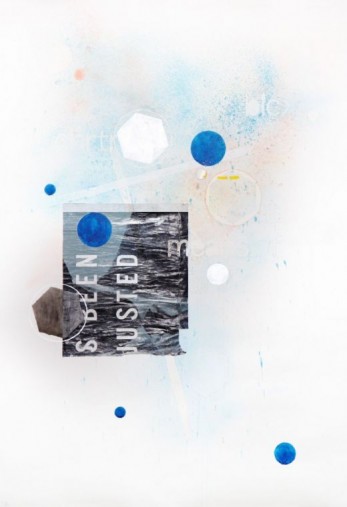
Invested in what we might call vernacularism, Adler Guerrier’s most recent solo exhibition, Here, Place the Lever at David Castillo Gallery, is a semiotic investigation and poetic rendering of the urban landscape of Miami.
Rashid Johnson: Message to Our Folks
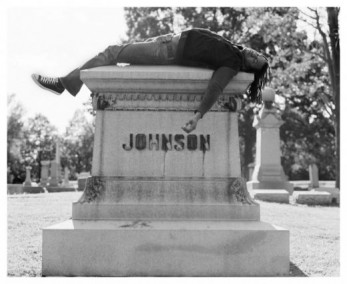
A central feature of many of his recent works, Johnson’s use of mirrors functions on multiple levels: reflecting the viewer, reflecting other works across the gallery, and offering windows of space inside which viewers can participate in alternate, duplicate, and distorted realities.
Zhu Jinshi
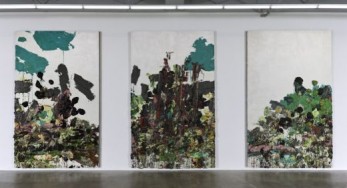
You smell the paintings in the back of your throat and try to take shallow breaths. The three 16-foot-tall oils strive upwards to the ideal of unsullied negative space. On average, the paintings weigh half a ton. The canvas at the top of the frames is stretched gale-taught. At the bottom, the weight of the paint has distended the surface to a slack edema. And while the triptych has the undeniable outline of a 山 (shan), the simplified character for mountain, the artist insists that it be displayed 3-2-1, with the peak still centered and the slopes switched. This choice, coupled with a palate of broad swathes of green littered with more muted industrial hues, evokes the cities surrounding the Yangtze that were abandoned and submerged during the earth-moving Three Gorges Dam project.
Theaster Gates
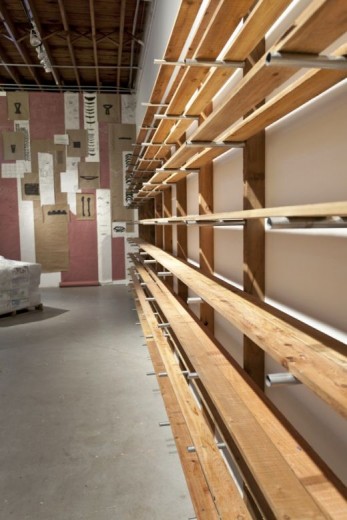
Chicago-based artist Theaster Gates opened his first solo exhibition in Miami at Locust Projects this November. Soul Manufacturing Corporation transforms the gallery space into a site for the actual production of goods, making the labor of the artists who will work in the space available for public consumption. This project is the outgrowth of a practice that encompasses sculpture, painting, performance, singing, ceramics, and installation, alongside urban planning, construction, and community engagement. In anticipation, Gates and Diana Nawi, Associate Curator at the Miami Art Museum, exchanged emails and phone calls in late October of this year.