
Category Archives: Reviews
A Portrait of Punk

Written on December 3, 2014 at 10:40 am, by Jessalyn Santos-Hall
Photographs and videos of the people who shaped Punk were recently on view at Ringling College’s Selby Gallery. Presented as joint exhibitions, Low Fidelity: Still Photographs by Bobby Grossman 1975-1983 recalled the style of a previous generation, and Underground Forces: Target Video 1977-1984 offered a time capsule of musicians and artists trying to establish themselves. Together, the exhibitions revealed how the movement continues to be affected by the way it’s represented.
GOLD
Written on December 3, 2014 at 10:39 am, by Jessalyn Santos-Hall
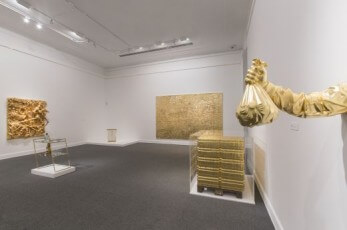
Curated by José Carlos Diaz for the Bass Museum of Art’s 50th anniversary, GOLD assesses the power, effect, and significance of gold through both literal and abstract approaches. The group show consists of 30 works from 24 multinational artists, all unified by the implementation of the precious metal in their pieces. Ranging from photography to sculpture to video, GOLD strengthens concepts of beautification, power, deception, perfection, ancestry, and divinity by encouraging viewers to question the capability of gold.
Robert Winthrop Chanler
Written on December 1, 2014 at 7:32 pm, by Jessalyn Santos-Hall
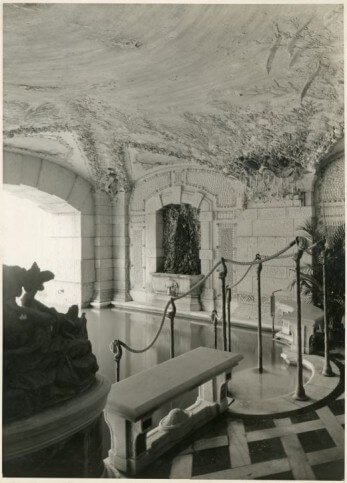
Ornate and extraneous, Robert Winthrop Chanler’s work at the Vizcaya Museum and Gardens can trace part of Miami’s history of wealth, patronage, and aesthetics that developed concurrently with its settlement. It also reminds visitors of South Florida’s almost immediate proclivity towards ostentation and decadence. Chanler was a descendant of some of New York’s most elite families (his mother was an Astor) and his artwork reflected the education he was able to attain, as well as the comfort within which he lived. He’s often characterized as an independent Modernist, someone who blended decorative, international style with fine art. The fantastical, exotic screens, murals, and architectural elements he created were distinct, and have remained unique from his peers. Despite the European avant-garde dominating the memory of the exhibition, Chanler had perhaps the largest American showing at the first Armory Show in 1913, which had particularly sought decorative artists.
Rafael Domenech: Time / Memory / Context
Written on December 1, 2014 at 6:02 pm, by Jessalyn Santos-Hall
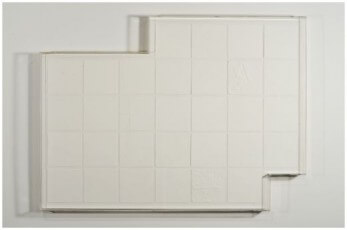
Memory has been at the core of human existence from time immemorial. Our fleeting presence seems to be at the root of a pressing need to seize life through memory and remembrance—the only way, apparently, to defeat time.
Caribbean: Crossroads of the World
Written on September 13, 2014 at 8:48 am, by Kara Pickman
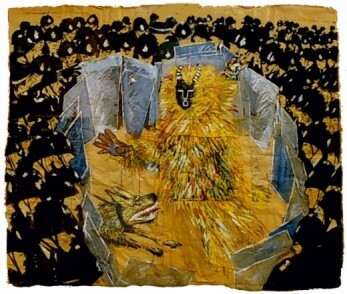
Caribbean: Crossroads of the World, offering a 200-year survey of visual culture from the Caribbean Basin, results from more than a decade of devoted work by curator Elvis Fuentes. Taking as its point of departure the Haitian Revolution (1791-1804)— a pivotal moment that changed the Caribbean’s dynamics with Europe—in the history of the area, the exhibition rejects the reductionist and extended chronological vision of a place where the coexistence, persistence, and overlap of different historic eras is one of the most outstanding endogenous characteristic.
Miami Performance International Festival
Written on September 13, 2014 at 8:43 am, by Kara Pickman
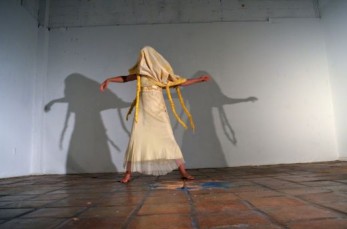
Held in the city’s dormant summer months since 2012, The Miami Performance International Festival offers artists from the States, Latin America, the Caribbean, and Europe a public platform far from Art Basel. Organized by artist and curator Charo Oquet the festival is unrefined compared to market-driven fairs, allowing artists to express challenging themes that emphasize the pressures of conformity and emotional states of being.
Leo Gabin’s Florida
Written on September 13, 2014 at 7:36 am, by Jessalyn Santos-Hall
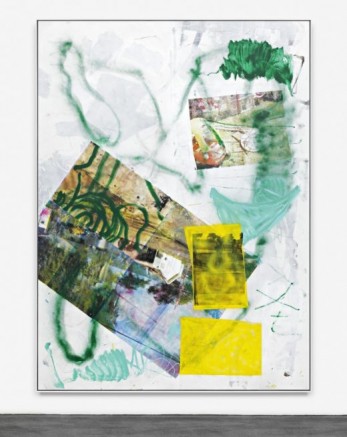
Three Belgian artists, represented by a gallery in Berlin, stage an exhibition in London concerning life in Florida. Chew on that. Chew slowly and hope it stays down. Lieven Deconinck, Gaëtan Begerem, and Robin De Vooght are three multidisciplinary artists who have meshed their names together to form Leo Gabin. For their recent solo exhibition, part of the alternative Inside the White Cube series at White Cube (Mason’s Yard) in London, Leo Gabin addressed Florida as a modern Limbo: where those occupying it lie in wait, in longing but with little hope, for a future above and beyond their current circumstances.
Walkin’ in the Sand with Beach Day

Written on September 13, 2014 at 7:17 am, by Jessalyn Santos-Hall
The first time I saw Beach Day perform was from the periphery of a sweaty mosh pit at Gramps Bar in Wynwood, where the band opened up for pop-punk icons the Thermals. Skate videos showing epic, painful wipeouts ran continuously on loop, projected against the side of an adjacent building. A haze of pink lighting enveloped the trio, tempered only by a few Christmas lights slung sparsely and haphazardly inside the small performance tent. When slender lead singer Kimmy Drake introduced herself as “just a Kendall girl,” referring to the blasé Miami suburb known mostly for its Barnes & Noble, audience members stirred restlessly. But then she froze the crowd with vocals that would’ve made Jack White, Kim Deal, and Phil Spector each nod their heads in tacit, rhythmic, hypothetical approval.
Little Haiti Country Club
Written on September 13, 2014 at 7:11 am, by Kara Pickman
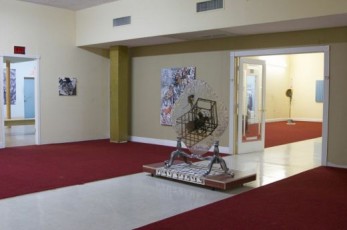
Miami’s artists who have been around long enough to have seen and inhabited the city’s waysides—those places just beyond the reaches of gentrification and development, but whose fate will likely meet both—know a familiar narrative. It goes like this: We jump from ruin to ruin and ride out the final stages of spaces bound to meet a very different future, lingering in the dingy moments that comprise its past before it is razed, renovated, or beautified in anticipation of a soon-to-be-changed neighborhood. In the dead of summer, with the hustle of the art fairs and the perfume-soaked, diamond-crusted upper level affairs on holiday, the artists can assemble themselves in their sweaty lair in true form. In this instance, it takes the shape of an exhibition of artists who are working, or have worked, in Little Haiti.
Urbes Mutantes: Latin American Photography 1944-2013
Written on September 13, 2014 at 7:09 am, by Kara Pickman
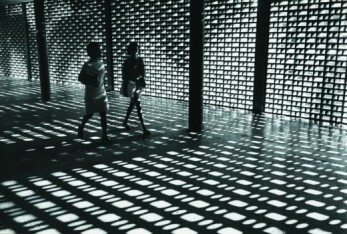
Urbes Mutantes: Latin American Photography 1944-2013 announces itself first as an exhibition of street photography. The mobility of the photograph, the viewer is told, lends itself synchronically to the rhythms and transient excesses that compose the chaos of city life. This evocative intimacy between photography and the frenetic charge of the urban strike a particular resonance in Latin American cities. Such is the curatorial premise of the exhibition, organized by Alexis Fabry, curator of the Poniatowski collection; and María Wills, a curator at the Museo de Arte del Banco de la República in Bogotá; currently presented at the International Center of Photography in New York. Consisting of more than 300 images selected from the private collection of Stanislas and Leticia Poniatowski, Urbes Mutantes offers an incredible survey of photography across 10 Latin American countries.